Supply chain · Diagnostic tool
Make them feel
the cost they didn't know they had.
ProvisionAI's buyers were convinced their supply chains were fine. No pain, no urgency, no reason to change. The product was excellent. The prospect couldn't feel why they needed it. So we built a tool that made them feel it — before a single sales call.
The problem
Buyers don't resist buying.
They resist feeling the problem.
ProvisionAI's prospects were running supply chains at 87% payload utilisation and calling it fine. At their scale — hundreds of loads daily across a global network — that 13% gap compounded into extra trucks, extra miles, extra emissions, and extra cost every single day.
But they couldn't feel it. No benchmark. No reference point. No urgency. Every discovery call started with the rep trying to convince the prospect they had a problem that the prospect was certain they didn't have.
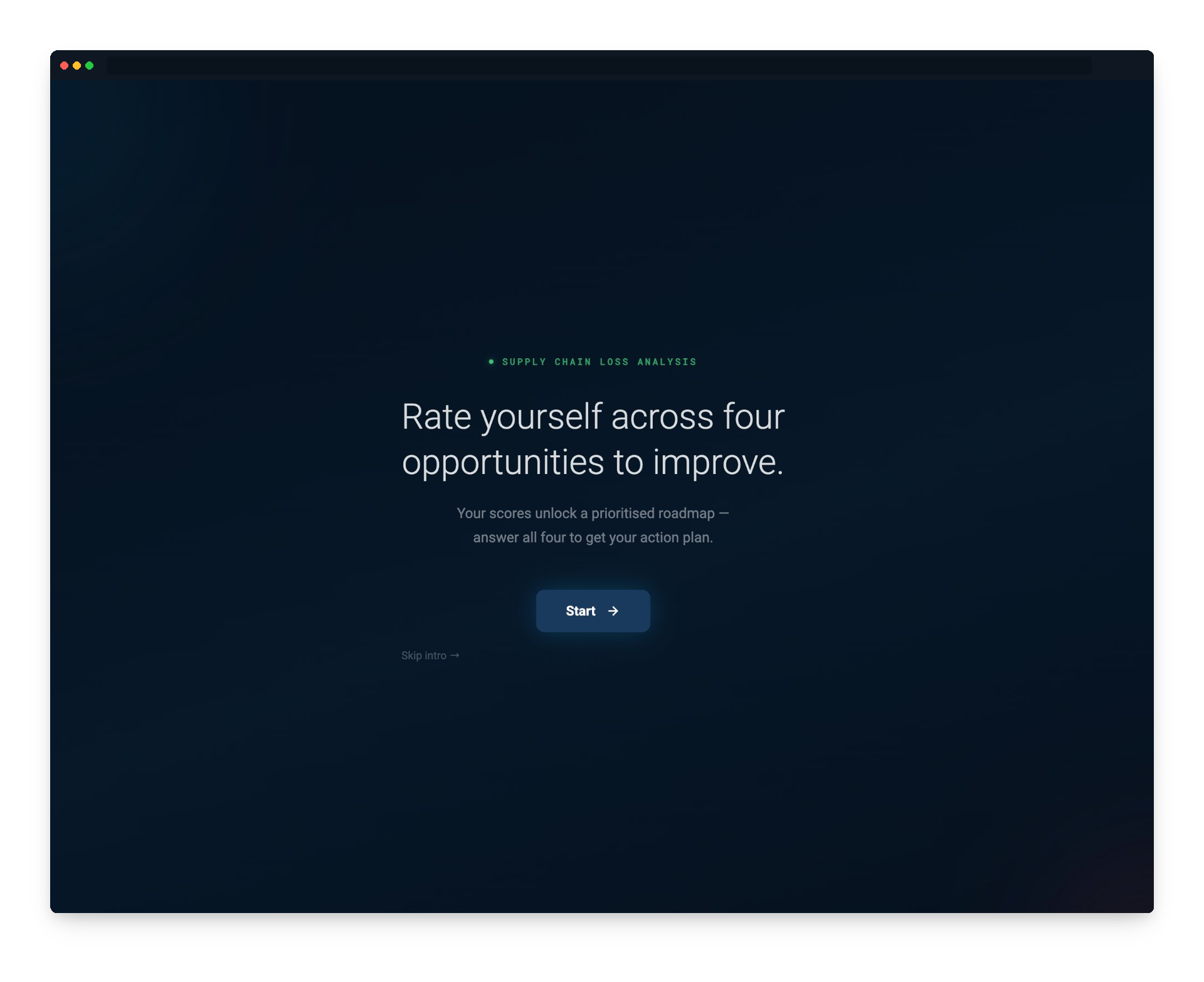
The entry point — four modules, one picture. Score yourself to get your action plan.
The core insight
A tool that surfaces hidden cost in the prospect's own words removes the resistance before the sales conversation begins. They don't need to be convinced of a problem they just discovered themselves.
How it works — the diagnostic
Score yourself.
The lowest score becomes priority #1.
Four modules — load optimisation, network flow, OTIF performance, system synchronisation. Each one covers a domain where supply chains lose money invisibly. The prospect rates themselves 1, 2, or 3 on each statement.
The tool shows the standard first — what good looks like. Then the prospect assesses their own gap against it. No benchmarks shown until they've scored themselves. They define the problem. The tool just holds the mirror.
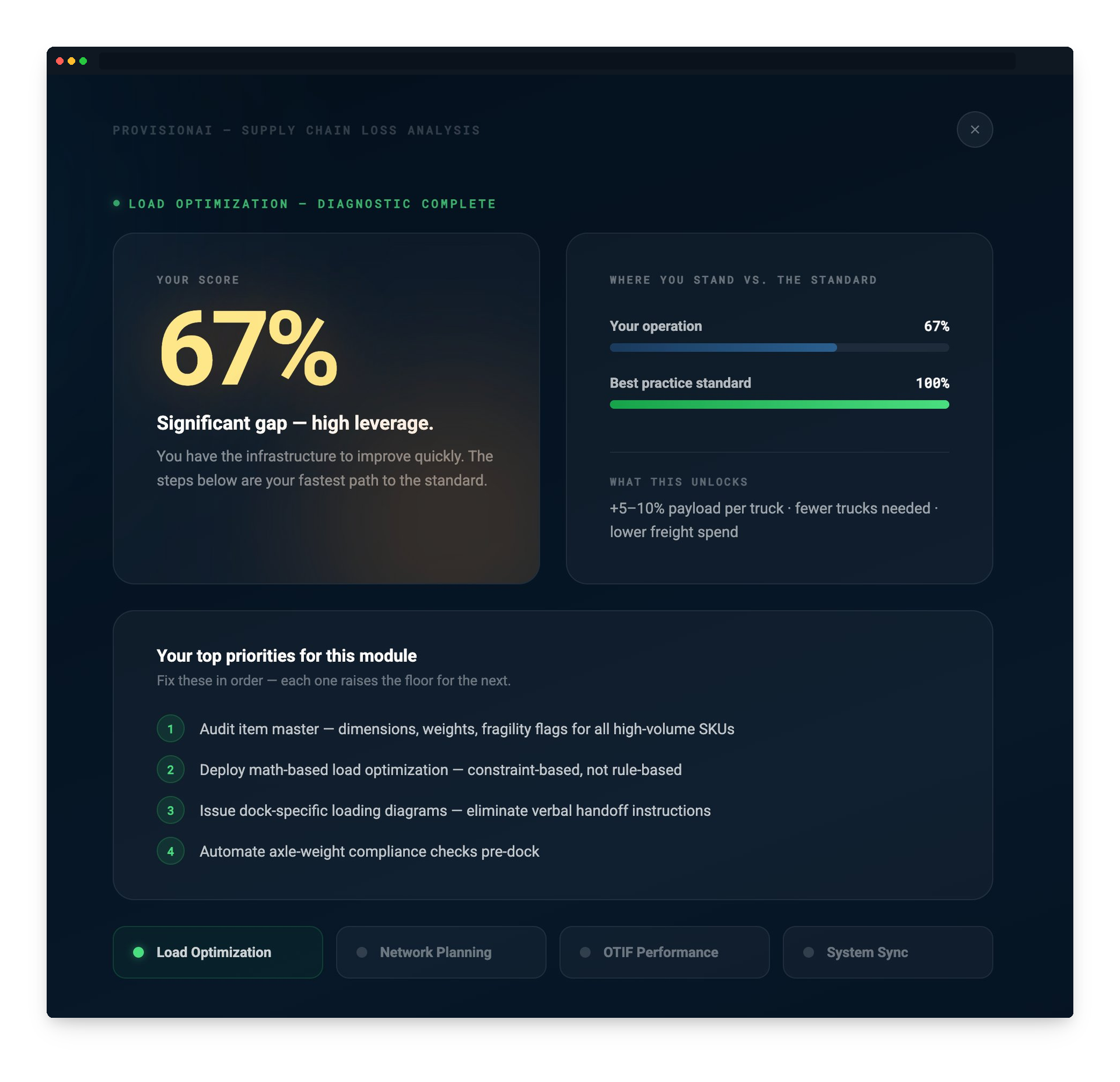
Diagnostic complete — 67% vs the 100% standard. Significant gap, high leverage.
The output — personalised roadmap
Their roadmap,
built from their own scores.
Once all four modules are complete, the tool ranks the gaps. The lowest score becomes priority #1 automatically. The prospect sees a five-step fix for their most critical gap — generated from the answers they just gave, not from a generic playbook.
A generic recommendation is easy to dismiss. A recommendation that traces directly back to their own scores is much harder to argue with. They built the brief. The tool built the plan.
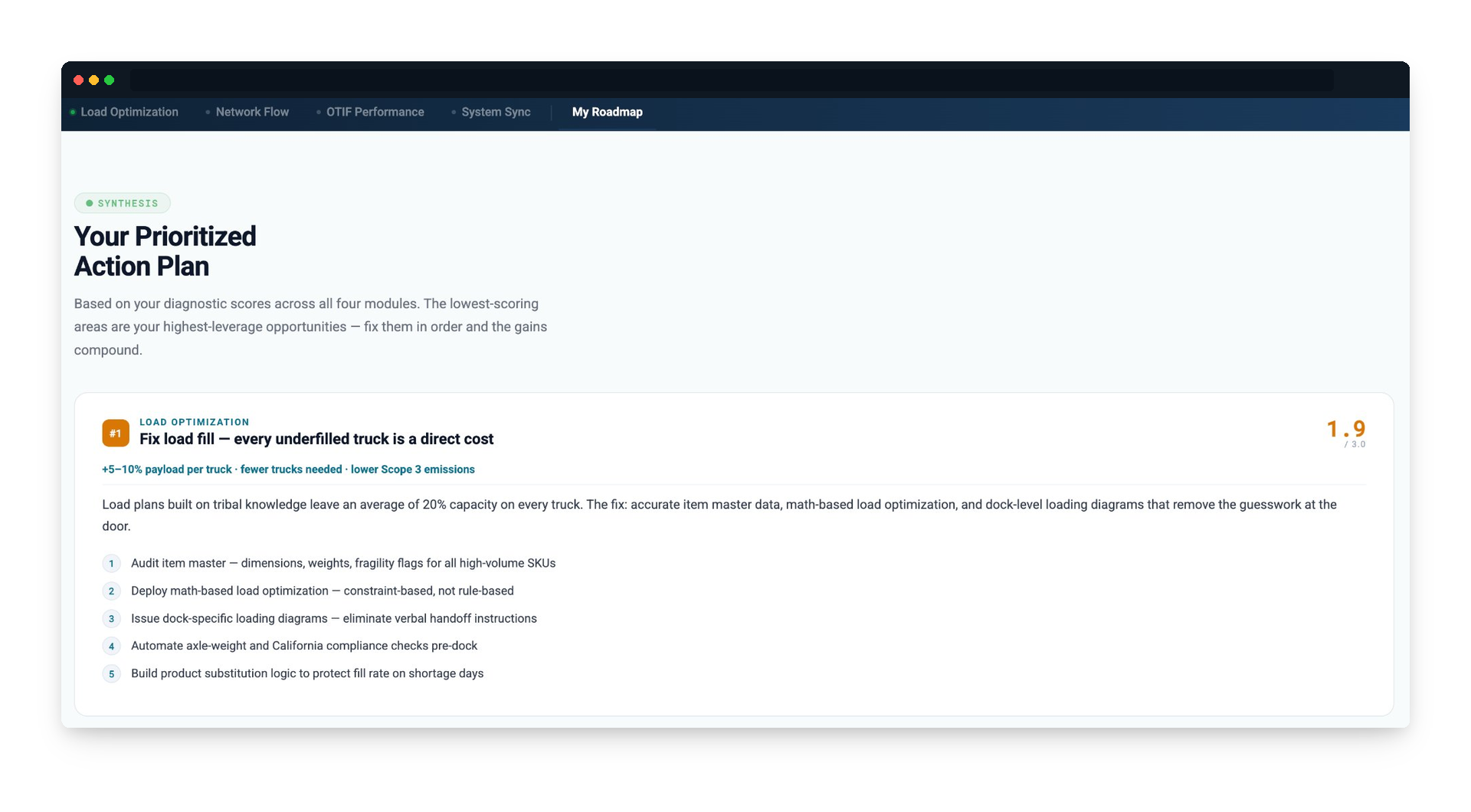
The prioritised action plan — lowest score becomes #1 priority automatically
Module 3 — OTIF performance
Eight levers.
Most teams pull two.
OTIF failures start upstream in planning — not on the dock or the road. The tool shows all eight levers that control on-time delivery. Most operations are using two or three. The other five are active sources of failure hiding in plain sight.
An AI assistant — Ask Provision — is embedded directly in the tool. The prospect can ask in plain language: "what is OTIF?" or "where do I start?" and get a direct answer without leaving the diagnostic. The tool answers questions the rep would normally field on the discovery call.
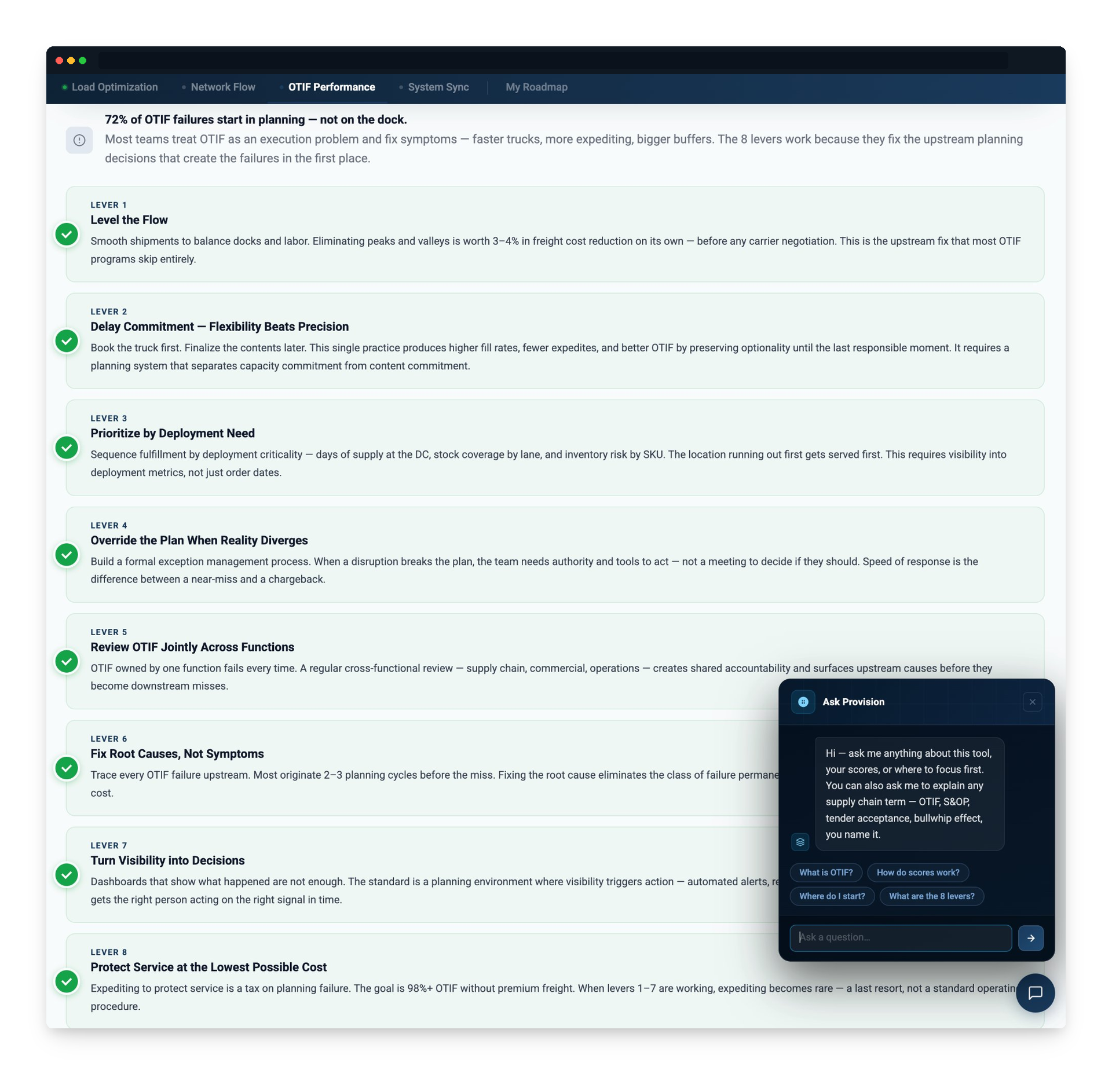
OTIF performance module — 8 levers, with the Ask Provision AI assistant open
The depth — the playbook
Not just the gap.
The five-step fix.
Each module has three tabs — the standard, the self-assessment, and the playbook. The playbook isn't generic advice. It's a sequenced five-step fix for the specific gap the prospect just identified. Item master accuracy. Maths-based load building. Dock-level loading diagrams. Each step closes a defined percentage of the gap.
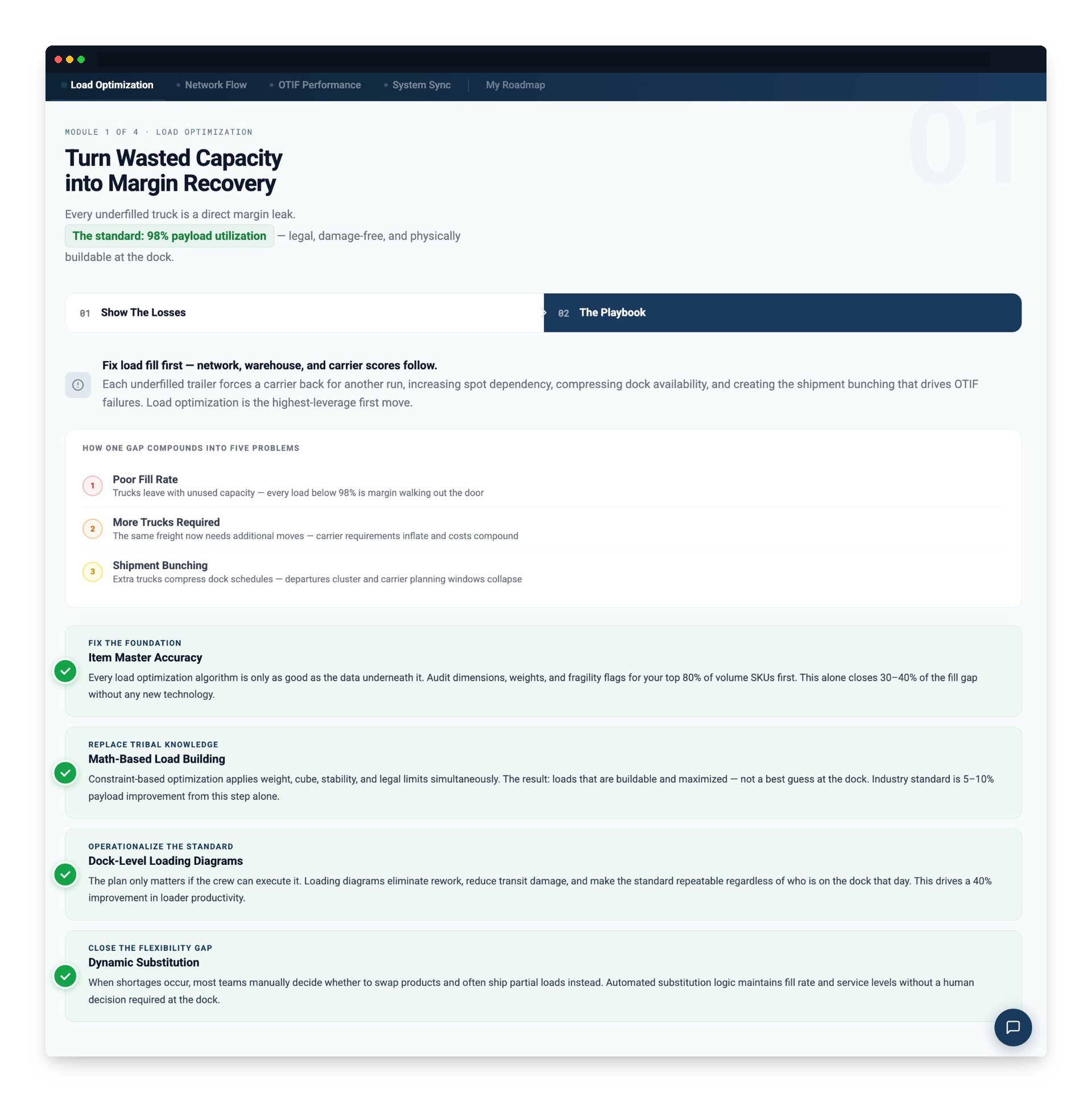
The playbook — dock-level loading diagrams, maths-based load building, dynamic substitution
What it changes in the room
The discovery call becomes a confirmation call. The prospect arrives with a gap score, a ranked priority list, and a five-step fix. The rep's job is to show how the product executes the playbook — not to convince the prospect they have a problem.
See it for yourself.
The diagnostic is live. Four modules, about eight minutes. Score yourself honestly — the roadmap is worth it.